Tracking Responsible Gaming Policies and Their Influence on Tournament Strategies Across Licensed Online Platforms and Player Networks
Skriven av Gisela Simmons · 2026-08-24
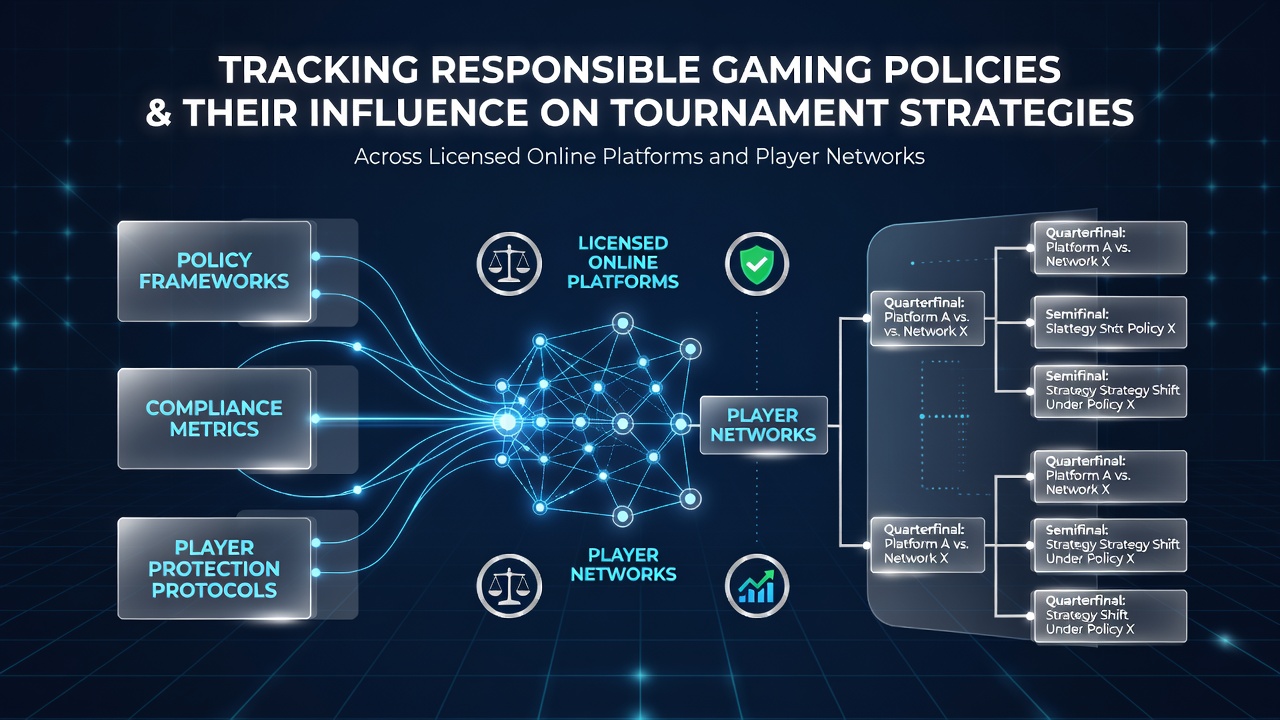
Tracking Responsible Gaming Policies and Their Influence on Tournament Strategies Across Licensed Online Platforms and Player Networks
Responsible gaming policies have expanded across licensed online platforms in recent years, with operators implementing tools such as deposit caps, session timers, and self-exclusion programs that directly shape how players approach tournaments. These measures, required under various regulatory frameworks, require participants to set boundaries before or during events, and data from multiple jurisdictions shows measurable shifts in strategy selection and bankroll management as a result.
Core Components of Responsible Gaming Policies in Licensed Environments
Licensed platforms in regions including parts of Europe, North America, and Australia mandate features that track player activity and enforce limits, and these systems integrate with tournament software to pause or restrict participation once thresholds are reached. According to reports from the National Council on Problem Gambling, operators must provide real-time alerts and mandatory cooling-off periods, which players then factor into their pre-tournament planning. Researchers have documented that participants often adjust entry numbers or stake levels to stay within enforced daily or weekly caps, creating a layer of financial discipline that was less formalized in earlier unregulated settings.
Player networks connected to these platforms share aggregated anonymized data on policy compliance, allowing operators to refine algorithms that flag unusual session patterns during multi-table tournaments. This information exchange, facilitated through industry associations, helps standardize approaches without revealing individual identities, and figures released in mid-2025 indicated a 12 percent reduction in extended play sessions across monitored networks after policy updates took effect.
Strategic Adjustments Observed in Tournament Play
Tournament participants respond to these policies by incorporating session-length considerations into their overall approach, such as selecting shorter formats or spreading entries across multiple days to avoid triggering automatic limits. Studies from the Australian Gambling Research Centre have tracked how players modify aggression levels in later stages once time-based alerts appear, often shifting toward tighter ranges to preserve stack integrity within constrained windows. Data indicates that networks linking multiple licensed sites enable cross-platform visibility of self-imposed limits, so individuals who set conservative boundaries on one platform carry those constraints into events hosted elsewhere.
What's interesting is how these rules influence late-registration decisions and re-entry patterns, because platforms must halt additional buy-ins once a player's preset limit is reached. Observers note that this dynamic encourages earlier commitment to events or the use of satellite qualifiers that spread risk across smaller stakes, and records from 2025 events show increased satellite volume coinciding with stricter enforcement periods.

Regulatory Developments and Data Trends Through 2026
Policy tracking systems continue to evolve, and several jurisdictions have scheduled further refinements for August 2026 that will expand mandatory reporting on tournament-specific behaviors. These updates require operators to log how limits interact with prize pool contributions and final table appearances, generating datasets that researchers can analyze for patterns in risk-adjusted play. European regulatory bodies have already begun pilot programs that share compliance metrics across borders, allowing platforms to align their tournament offerings with the strictest applicable standards in connected networks.
Evidence from academic reviews shows that players who regularly engage with these tools demonstrate more consistent bankroll allocation across series, reducing instances of overextension during high-volume periods. Platforms report that integrated dashboards now display projected session costs alongside tournament structures, giving participants clearer information before registration closes.
Impact on Player Networks and Cross-Platform Coordination
Player networks that span multiple licensed operators facilitate the transfer of responsible gaming settings, so limits established on one site automatically apply when users access linked tournaments. This coordination, supported by secure data protocols, prevents circumvention while preserving competitive integrity, and industry reports highlight a decline in multi-account usage following the rollout of unified tracking. Those who have examined network-level statistics note that collaborative filtering helps identify emerging trends, such as groups favoring policy-compliant formats that reward endurance within set timeframes rather than marathon sessions.
Additional tools, including reality checks delivered at fixed intervals, prompt strategic pauses that can alter hand-selection frequencies in ongoing events, and aggregated findings suggest these interruptions correlate with steadier performance metrics over large sample sizes.
Conclusion
Tracking systems for responsible gaming policies continue to intersect with tournament strategies on licensed platforms, producing documented changes in how participants manage entries, timing, and risk parameters. As new requirements roll out in August 2026, the datasets generated will further clarify these connections across player networks, supporting ongoing refinements in both regulatory oversight and platform design.